
Just started Year 11 Physics with Module 1: Kinematics and have no idea what’s going on?
Don’t freak out!
In this article, we’ll give you an overview of the module, assessment patterns, PLUS How to prepare, use class time and knock this module out of the park towards your Band 6!
So, what are you waiting for? Let’s dive in!
什么是11年级的物理模块1:运动学是什么?
How do I get a Band 6 in Year 11 Physics: Kinematics?
How can I prepare for the Year 11 Physics Kinematics module?
什么是11年级的物理模块1:运动学是什么?
Theoretically, kinematics is the mathematical description of observed motion (without动力学,对基础力,惯性和能量的分析,该分析在模块2中覆盖)。
但是,您在这个模块中可以期待什么?
Firstly, discussions of force, energy and inertia are relegated to the second module – Dynamics. In Kinematics, we’re just focussing onmotion.This also involvesmore vectors and more mathsthan the mechanics module.
Secondly,恒定加速度下运动的矢量和定性描述已进入!以前,教学大纲仅覆盖平均速度,现在随时加速覆盖速度。
This is extended to the mathematical description of falling objects (lifted from the old year 12 projectile motion unit). Teachers tended, smartly, to introduce students to this in year 11 anyway, so there shouldn’t be anything too new.
Lastly,“描述一个身体相对于另一个身体的运动”has become“Analyse在各种情况下对象在两个维度中的相对运动透明(with vectors). This is great news as a proper treatment of the vectors and maths of physics为12年级和大学水平的物理和数学奠定了更强的基础!
How do I get a Band 6 in Year 11 Physics: Kinematics?
Here’s a breakdown of the knowledge and understanding this module targets for mastery.
您需要做的两件事是使用向量和数学在均匀加速下分析2D运动,并通过实验分析图形数据,并反思实验过程。
Step 1: Understand Velocity and Displacement
The name of the game in this module is to become expert at describing the velocities and displacements that结果来自力(数学和向量)。
We don’t care so much about understanding the forces causing all this motion yet (thewhyof the acceleration); just atgetting good在物理学的描述能力上。尽可能多地解决练习问题。
This is a new skill; vectors are a new language. You want to consume as much graphs, simulations and practice questions as you can.
在各处寻找它们,突破班级教科书的范围,并渴望找到尽可能多的向量运动问题(您可以瞄准了世界各地的每个入门物理课程教科书,都包括此主题)。这就像学习骑自行车一样 - 您要这样做,直到它粘住为止。
Part of the challenge of Physics that lingers from the outset (until things点击-in后来)是转向新的思考和解决问题的新方式。拥抱这一点,并尽可能多地消费。
您需要了解两个主题领域:
Topic 1: Motion in a Straight Line
Inquiry Question:How is the motion of an object moving in a straight line described and predicted?
This seems pretty straight-forward in theory. How complicated could movement in a straight line be? Maybe not complicated, but there are a lot of factors in play here.
你需要能够describe straight line and uniformly accelerated motion qualitatively and quantitatively using scalars and vectors。您还需要能够使用向量分析来计算两个对象的相对速度沿同一条线移动。
你需要能够分析实验的瞬时和平均速度。这可以是您亲身进行的实验,也可以是您观察到的实验(有关如何在本文的稍后再进行的实验)。
您需要了解并能够计算(在各种情况下)时间,距离,位移,速度,速度和加速度。
And finally, you need toanalyse and derive relationships between the dimensions of movement in a straight line。
Topic 2: Motion in a Plane
Inquiry Question:How is the motion of an object that changes its direction of movement on a plane described?
这是它变得更加复杂的地方。它的重要的是,您对主题1:在直线上的运动有一个非常强烈的理解,因为此内容将成为主题2的基础。
在主题2中,您将需要能够分析一个和二维中的向量and resolve a vector into two perpendicular components and add two perpendicular components to obtain a single vector.
Using vector addition and resolution of component vectors, you willrepresent the distance and displacement of objects in a horizontal plane.
Use algebra, graphs and vector diagrams todescribe and analyse the way in which the motion of an object changes with respect to velocity and displacement。You also need to use vector analysis to描述和分析一个对象相对于平面上另一个对象的相对位置和运动。
Finally, you need to在各种现实情况下分析对象在两个维度中的相对运动。These situations could be a boat on a flowing river relative to the river bank, two moving cars or an aeroplane in a crosswind relative to the ground.
步骤2:成为图表主
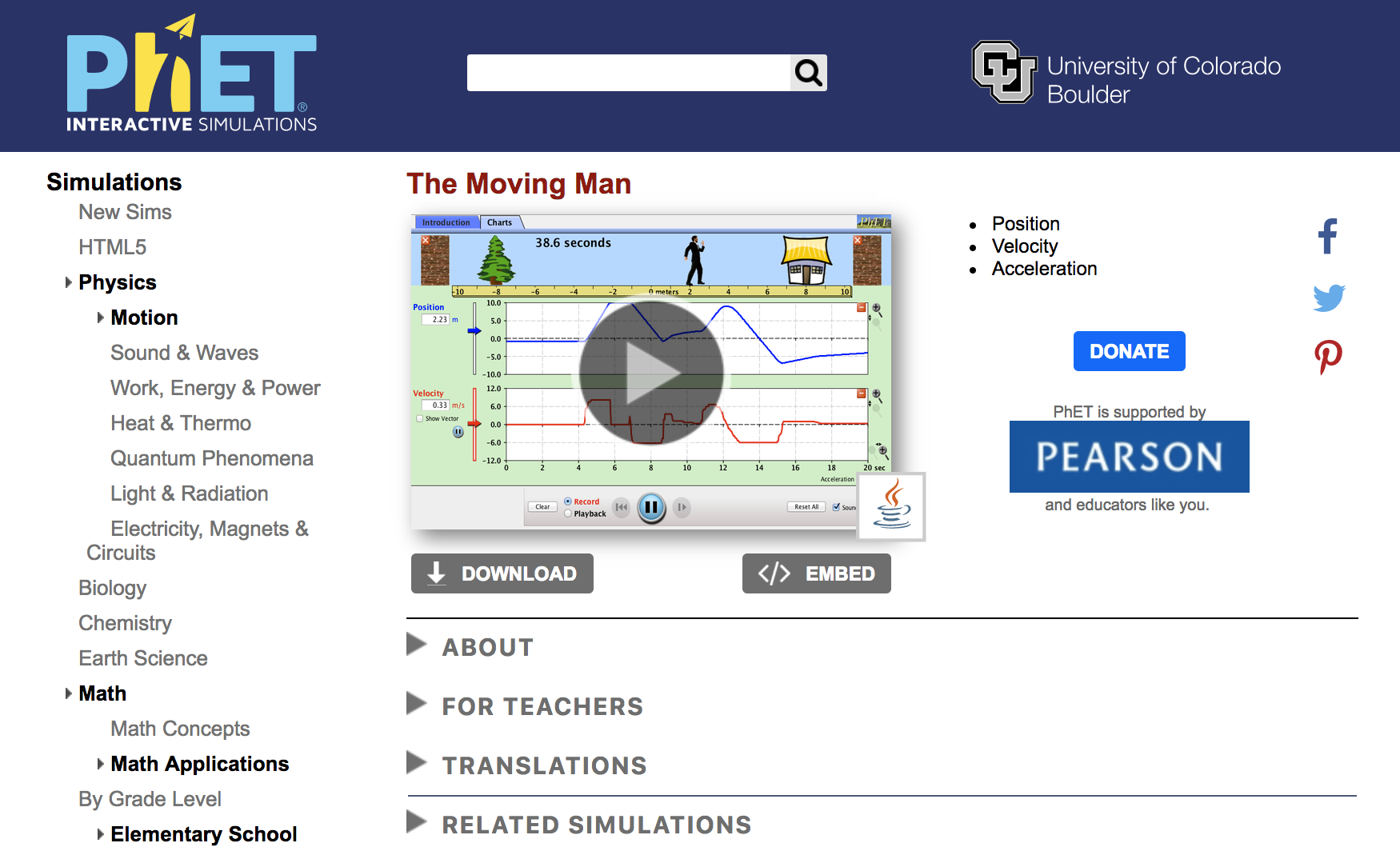
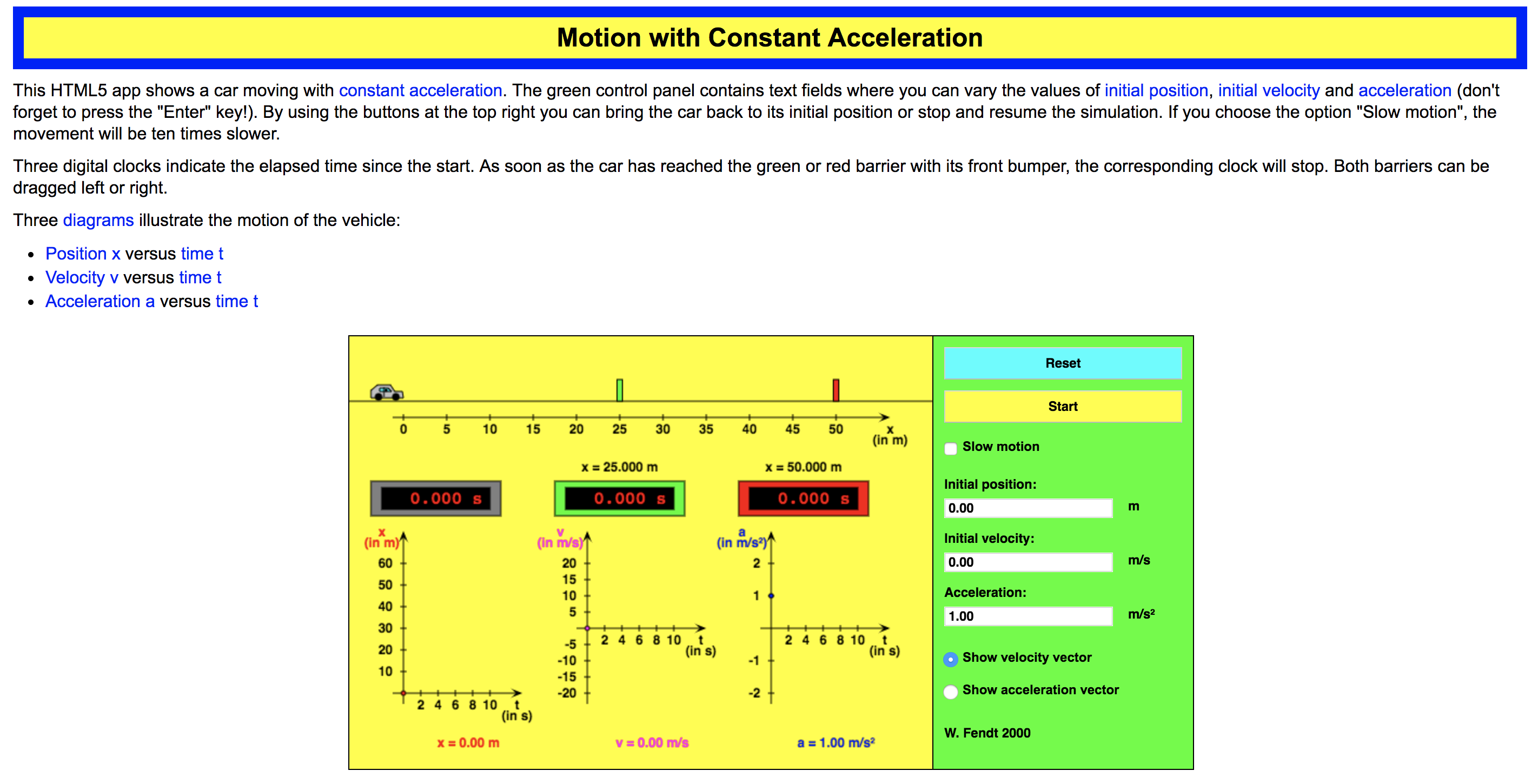
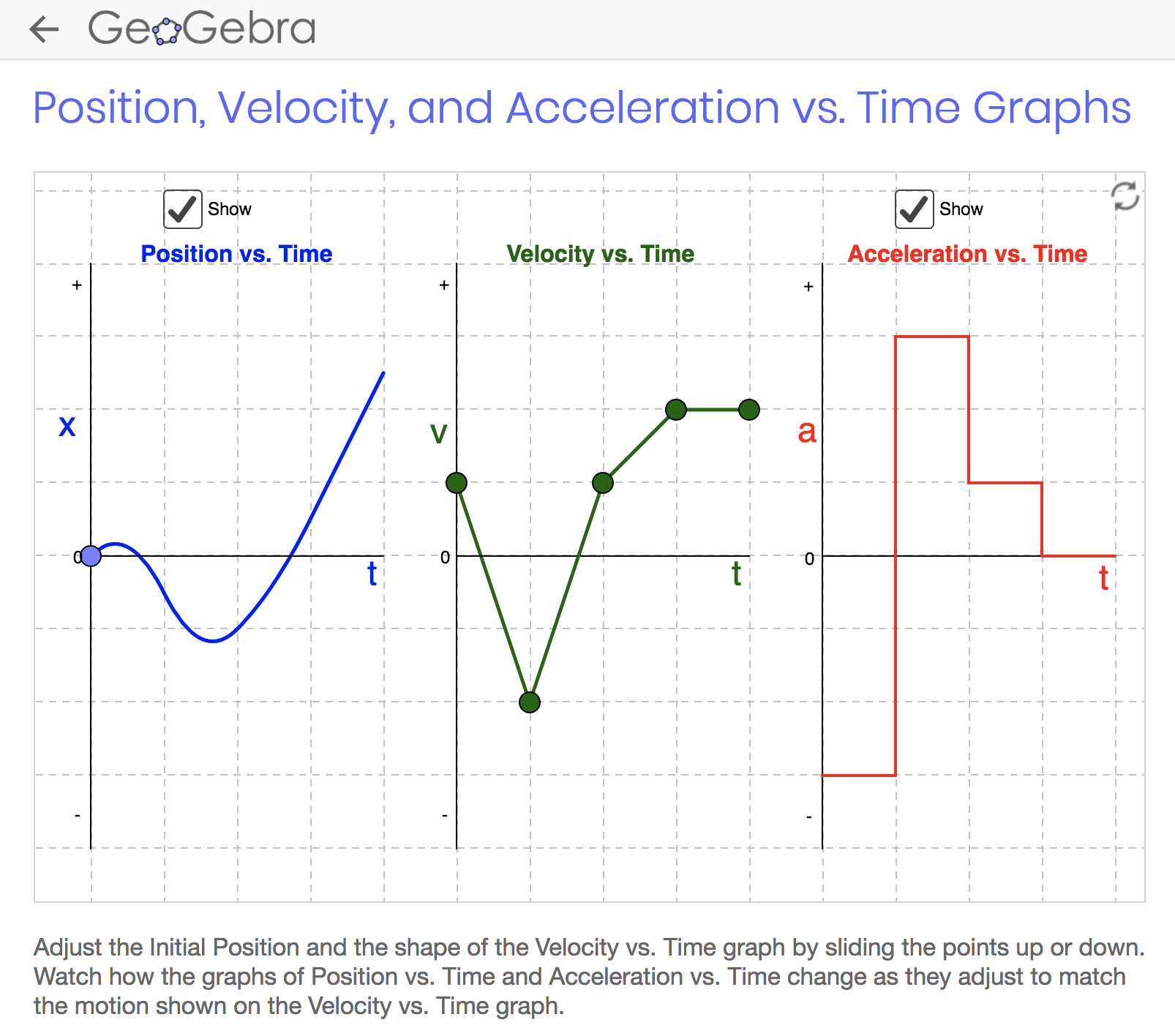
This is a seriously important skill for Kinematics. There are many applets online that can generate kinematics graphs for you.
查看…
PhET by the University of Colorado
Walter Fendt
地理布拉
IWant2Study.Org
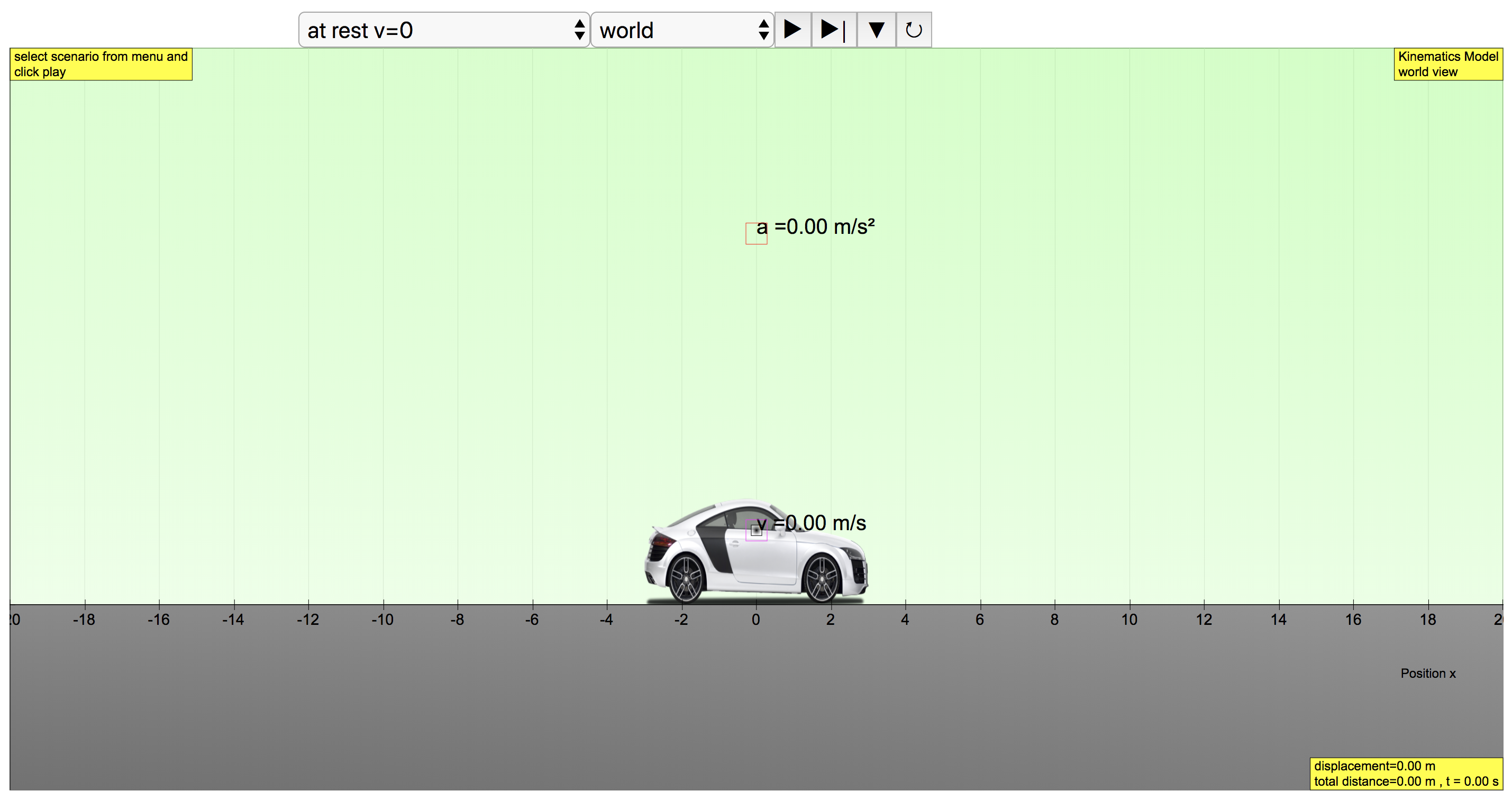
现在您已经检查了那些很棒的资源,现在该使用它们了!
Step 1:Use the displacement graph to generate your own pen-and-paper velocity and acceleration graphs, which you can then easily check using the graphs on the site.
Step 2:Apply the uniform acceleration equations to predict the velocity at later times and see how it compares to your pen-paper graphs (using facts like that displacement is the area under the velocity graph on the same time interval).
步骤3:Using the acceleration setting in the applet, generate “perfect” velocity and displacement graphs in excel using the uniform acceleration equations from the syllabus as your excel functions. Compare these to your pen-paper graphs!
步骤3:学会爱实验
Here’s our #1 tip: be super serious and committed to doing your own experiments.
You can easily create your own primary data at home练习学校的特定调查(以及一般实验的艺术,因为它在接下来的两年中一直在出现!)
Step 1:Use a tape measure up against a wall and a phone (that can replay time-stamped videos in slow-mo) to self-generate pen-n-paper displacement-time graphs of a free-fall object.
Step 2:自己分析您的位移时间图,以生成笔-N-Paper速度和加速度图。
步骤3:Use the SUVAT equations to find predicted velocities at specific times and compare the numbers to graph read-offs at the same instances
You can also repeat the kinematics experiment using recordings of other people doing it on YouTube – for example:
Check out each of the following two videos…
Step 4: Then,tabulate time and displacement data by pausing the slow-mo videos.
步骤5:Pen-n-Paper将数据绘制,然后将其绘制在Excel中。
步骤6:将SUVAT方程用作Excel函数来覆盖完美的理论上预测关系。
One skill NESA is looking for is基于理论的数据评估(由方程式总结)。您想练习给出物理学原因,以产生相同大小和方向的偏差!
So it’s important to research the physics reasons that the theory (equations) are not exactly modelling reality.
How to Prepare for Year 11 Physics Module 1: Kinematics
Step 1: Gather your resources
从你的老师和loc得到教科书的建议ate them (ones with worked solutions are better). Grab future class worksheets off your teacher and use the web to guide you on how to do them. Your weak spots will be covered in class while everyone else is learning how to do them for the first time!
Crunch through as many questions as it takes to feel confident (present challenging ones to your tutor and teacher).
步骤2:开始工作
You don’t have to wait until class; there’s a trove of teaching on how to nail this topic all over the web – including youtube videos from other teachers and science educators.
Pre-learnthe topic: Stay at least a week ahead of your class teacher. Enter those lessons with clear questions already formulated in your mind waiting to be answered. Treat your class-time as revision of your pre-learning.
然后,当您实际上在学校进行修订时,实际上是第三次通过相同的内容!
To help you work ahead, here’s our number one Year 11 Physics study tip:
使用教学大纲查询问题来创建自己的学习问题!
因为这个模块是如此新,所以没有很多问题或资源进行练习和修订。因此,请确保您获取11年级物理大纲的副本here,,,,and take a look at your inquiry questions and syllabus dot-points.
We’ve outlined most of them in the article above, so here’s an example to get you started:
For Topic 2 of Kinematics, Motion in a Plane, the inquiry question is:“How is the motion of an object that changes its direction of movement on a plane described?”
现在这很广泛,但是您可以将此问题应用于特定情况或示例,并在修订过程中使用它来练习。
步骤3:Use class time well
学how to master note-taking!
Re-read your notes you took in class. Re-write them as if you had to explain the same concept to a much younger person with no physics training. Re-write them without physics-specific, or complicated vocabulary.
If there’s anything you can’t re-phrase in to simple language highlight it – you’ve just ID’d a concept that has some holes you need to plug.
In summary…
成为6年11年级的物理运动学学生的乐队:
尽可能地在向量和方程式上找到尽可能多的练习问题。使用网络和YouTube指导您。在您的课程中停留一周,并将课堂时间用作与老师的修订会议。
Perform experiments yourself to obtain primary data and use others’ secondary data to generate a pen-paper graph of your own. Generate the other graphs from the first. Transfer over to excel and overlay graphs of the SUVAT equations. Practice comparing the theoretical and experimental and accounting for deviations using physics reasons.
将笔记用作ID知识差距的设备。
Are you looking for some extra help with Kinematics?
我们为我们的11年级物理教练和导师而感到自豪!
我们在各种科目中提供了多年K-12的辅导和指beplay安卓西西软件导,个性化的课程在您的家中或我们位于Hornsby的最先进的校园中进行了一对一的课程!
了解更多,并从鼓舞人心的导师和导师开始立即取得联系!
在1300 267 888上给我们戒指,给我们发送电子邮件[email protected]or check us out onFacebook呢
Adrian Wendebornis a qualified science and maths teacher with a physics/chemistry double-major degree from USYD and a GDipEd from UQ. Adrian has taught in QLD and NSW and has worked with Art of Smart Education as a campus teacher, tutor, resource developer and Head of Faculty.