

Are you interested in studying a Bachelor of Science in Information Technology at UTS but don’t know where to start?
Don’t worry, we’ve got you! We cover everything you could possibly need to know from core units to assessments to uni culture for this degree.
Check it out down here!
What is a Bachelor of Science in Information Technology at UTS?
Core Units and Majors
How to Get into a Bachelor of Science in Information Technology at UTS
What’s the Teaching Format?
What’s the Faculty and Culture Like?
What is a Bachelor of Science in Information Technology at UTS?
TheBachelor of Science in Information Technologycovers everything IT, likeprogramming fundamentals, web systems, network fundamentalsand more! Students who take on this degree will have access to a rich amount of resources, and find themselveslearning through a mix of practical and theory work.
Within this degree, students are able toget a tactile grasp on the inner workings of Information Technology through a scientific lens. It’s great for technical thinkers who also have a bit of creativity within them!
Diploma
The full title of this degree is actually‘Bachelor of Science in Information Technology Diploma in Information Technology Professional Practice’—quite a mouthful. This basically means that there’s a compulsoryDiplomacomponent that takes up48 credit points, and is also known as theWork Integrated Learning.
When taken full-time,the Diploma’s duration is one year with a combination of theoretical units combined with practical placements. It aims to help students develop their technical skills, but also build up their experience within the IT industry!
This combination of study and work placement willgive students a real grasp on the relationship between the practical and theoretical aspects they have been studyingwithin this degree.
Degree Structure
The UTS Bachelor of Science in Information Technology is extremely broad with various learning paths. This means thata multitude of different subjects, learning pathways or electives can be taken.
The structure of this degree is broken up like this:
- Core Units (48 Credit Points)
- Major (48 Credit Points)
- Work integrated learning (48 Credit Points)
- Option of (48 Credit Points):
- second IT major
- two sub-majors
- one sub-major and four electives; or
- eight electives
Career Paths
Studying a Bachelor of Science in Information Technology means you’ll beopening yourself up to many different career opportunities.These will vary with majors studied, your interests, or advancements in the IT field.
The following are possible careers for this degree:
-
- ICT business analyst
- Analyst/programmer
- IT project manager
- Network specialist
- Software developer
- Software engineer
- Systems analyst
- Web developer
Core Units and Majors
What are the majors?
There are five different specialisations (majors) that students can choose from. They are:
| Major | Description |
|---|---|
| Business Information Systems Management | Within this major, students will learn how to use and implement ICTs and other Business related programs. Students will learn how to produce information and technology relevant to the running and maintenance of businesses in a leadership role. |
| Data Analytics | This major combines both mathematics and information technology together to form a well balanced theoretical knowledge of developing programs, and analysing stats and figures. In this newly emerging sector of IT, students will learn how to control large data for businesses. |
| Enterprise Systems Development | This sector introduces students to the concept of development as a whole—students will learn to develop software, programs, apps and more! Students will become experts in quality control and developing programs that will be well sought-after. |
| Interaction Design | This major takes a real life approach, with students learning how digital technologies shape our everyday experiences. In learning this, students will learn to develop software and programs with their user in mind, ultimately creating programs that will be enjoyable, ethical and sustainable for individuals. |
| Networking and Cyber Security | Within this major, students learn everything there is to know about internet design. Students will learn how to develop security plans, user service and create quality of service. Students who major in this field will be at the forefront of technology services. |
What are the core units?
Within the Bachelor of Science in Information Technology, no matter what major is chosen,there are common core units that need to be taken for the completion of the degree. The core units range fromCommunication for IT ProfessionalstoWeb Systems. Here are some others that you’ll be expected to study:
信息系统概论
This unit provides students with a model and study ofhow technology is integrated into business, government and community systems. It introduces students to understanding trends such asmobility and globalisation.
Real life examples are studied and students are able to apply the theory to the practical examples.
Programming Fundamentals
This unit gives students the first building block for their studies in Information Technology. They willlearn basic skills in Java programming and software design,and there is no assumed programming knowledge going into this unit—no need to worry about being an expert in these programs beforehand!
Are there built-in internships?
Anindustrial internshipis a compulsory component of this course for domestic students, which ispart of the Work Integrated Learning. The duration is aminimum of nine months’ internshipand studying supporting subjects at UTS.
Full-time studentsnormally undertake the internship after completing second yearas units leading up to it prepare students for real life practice. More information on the industrial internship can be foundhere!
How to Get into a Bachelor of Science in Information Technology at UTS
The cut off forguaranteed entry into the Bachelor of Science in Information Systems at UTS is 80.40. If you did not achieve this ATAR, it is still possible to get into this degree—there is an alternate pathway!
UTS Insearch
The UTS Insearch Diploma of Information Technology, which differs from the Diploma in Information Technology Professional Practice, isoffered to students who did not achieve the minimum ATAR to gain admission into the Bachelor of Science in Information Technology.
The Diploma mirrors the Bachelor of Information Technology in first year study, butprovides students with extra support and subjects to prepare them for second year study. Successful completion of the Diploma will allow students direct entry into the second year of study within the Bachelor of Science in Information Technology.
Are there any prerequisite subjects or assumed knowledge?
There are no prerequisite subjects to gain admission into the Bachelor of Science in Information Technology, howeverthere are subjects which are considered assumed knowledge.
Basically, this means thatlecturers and tutors assume that students will already have a HSC level of understanding for certain subjects. The assumed knowledge subjects for this degree areMathematics Advanced and any two units of English.
Scholarships
UTS hosts a huge range ofscholarships based on differing factors such as academic achievements or equity. To have a look and see if any scholarships are the right fit for you, check out the UTS Scholarship Calculator toolhere!
What’s the Teaching Format?
UTS follows thesemester teaching pattern, meaning that subjects will be taught over two periods annually, withgenerally four subjects each academic session(on a full-time load)!
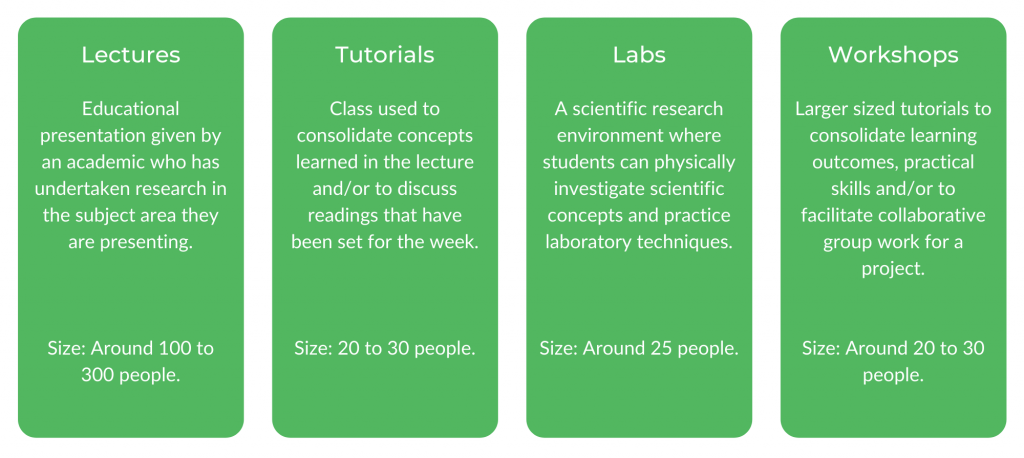
The teaching format for a Bachelor of Science in Information Technology varies greatly with each unit taken—the different teaching styles reflect the nature of the subject and the way the professors see fit for this subject to be taught!Different formats you can expect to be taught through within a Bachelor of Science in Information Technology at UTS include:
讲座
Within the UTS Information Technology, lecturescover all of the theoretical and non-practical components of the course.There isn’t a lot of room for class discussion because the lecturer has a lot of content to get through, so it’s important topay attention throughout as these will inform what you revise in tutorials.
These classes can have anywhere from100 to 300 peopleattending and they usually run for around2 hours.
Tutorials
The tutorial occurs after the lecture with a much smaller group of around30 peoplemaximum. The tutorial generally goes for around2 hoursand aims to go over topics covered in the lecture throughdiscussion, asking questions and completing tasks.
Labs
A lab is a practical-based type of class where you’ll get to do more hands-on activities, andput the theory you’ve been learning into practice.Students will have this class for around2-3 hourswith around25 studentsat most.
These classes will focus onexperiments, building technologiesand more!
Workshops
A workshop is another type of interactive class for this degree where you’ll get tolearn how to use certain programs and exercise your coding muscles. These classes tend to have around30 studentsand run for2 hours.
If you’re ever unsure of what you’re doing when using softwares,take advantage of this time to ask your tutors or classmates for any help! We all know how frustrating it can be when you get stuck and you’re at home with no one to help you face-to-face.
How much time will you spend on campus?
Typically, students can expect to be on campus for15-20 hours per weekdepending on what units they are taking! With this amount of contact hours,你可以找到自己熟悉的年代tudents in your cohort,so don’t be afraid to talk to any of your classmates—they’re trekking through this degree just like you.
What are the assessments like?
Just like the class delivery, the ways students are assessed are extremely broad.Students can havequizzes, midterm or end of semester examsthat cover the content they studied prior to those exams.
You also have to completegroup projects, where you may have to present and discuss a theory or concept with your team. Assessments unique to IT are开发代码或创建一个网站, and even构建ing things like a small chip or a little robotic prototype!
These practical assessments are where you will have to cover physical builds and codes of electronic creations.
Skills That You Refine and Learn
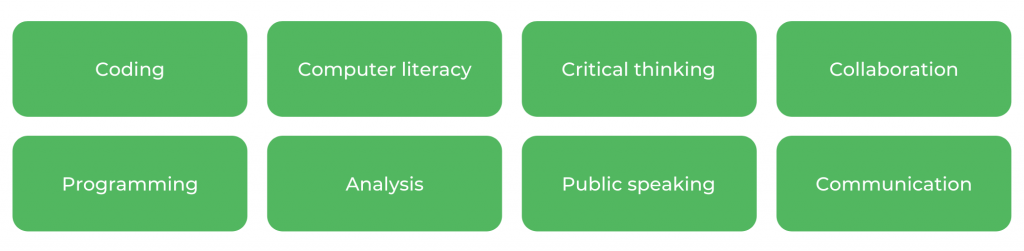
The Bachelor of Science in Information Technology at UTSprovides students with an extremely widespread range of skills to go out into the world with!Students will be pushed to their limits technically and creatively, and they will also developcritical thinking skillsto allow them to think outside the box.
Lots and lots ofcomputer skillswill be ingrained within students. This means that if you study this degree, yourcomputer literacywill skyrocket, but also, maybe you’ll get lots more requests from family and friends to attend to their computer issues for any reason at all!
Skills that students may not readily associate with a Bachelor of Science in Information Technology are the following:public speaking, collaboration within learning and communication. These skills may seem left field at first, but once study commences, students will realise that these skills are important to develop for success in the IT field!
What’s the Faculty and Culture Like?
The Bachelor of Science in Information Technology is a part of theEngineering and Information Technology Facultyat UTS!
This large faculty is known tohouse professors and lecturers who are passionate and in tune with the current happenings in the industry.This means that when there are any developments within the Information Technology field, your professors and tutors will be on the forefront of discovering and consuming this knowledge to deliver back to students!
Thestudents who study a Bachelor of Science in Information Technology at UTS echo their lecturers in passion and progressiveness!Students are all of diverse backgrounds and cultures, contributing to a multicultural university that prides itself on being so.
Societies
A way to make friends within this degree is to join a society! UTS hosts such a large cohort for the degree, sosocieties really are the way to go to connect with other students on a more personal level.
There are two societies relevant to UTS Information Technology that students will benefit greatly from joining. They are:
UTS Tech Society
This-multi disciplined societycombines lots of tech and science-related degrees togetherto make one large group!
UTS Tech Society is known forhelping students develop their skills, employability, study habitsand more. This society also hosts social events and encourages students to get to know their cohorts!
UTS Women in Engineering and IT
The goal of this group is tocreate limitless futures for all individuals in the engineering and IT field, not limited by any gender.This society shares and expands on knowledge, creates innovative gender inclusivity programs and focuses on构建ing a safe and inclusive community for women pursuing careers in an industry that is often male-dominated.
Support Programs
UTS also runs a program dedicated to mentoring students! The program,UTS Mentoringcreates a safe community for first year uni students, pairing them with a second year or beyond student who either studies the same degree as them or is in the same faculty.
生产指导的目的是beplay安卓西西软件for students to have a network that they can feel supportedas they transition into university!
Matilda Elliottis a Content Writer at Art of Smart and a Communication graduate with a major in Journalism at Western Sydney University. You can find some of her published work in a range of platforms including SBS World News, The Music Network and within her own creative exploits with her twin sister. Matilda is a lover of listening, helping people to tell their stories, making genuine connections, clowning around in her circus troupe and dancing like no one is watching at live music shows!