

Analysing visual texts are generally one of the most confusing and panic-inducing things you can face in the first section of your HSC English exam.
Not because they’re actually any harder – in fact, it’s usually quicker to analyse them than written texts – but because you have to analyse them in a different way!
By breaking down the process into三个简单的步骤, you can be writing awesome visual text analyses in no time.
All you have to do is figure outwhat you’re looking at, what you’re looking for and how to structure your answer。我保证比听起来更容易。
所以阅读并让我们使用这个很棒的指南来获得视觉,以分析HSC英语的视觉文本!
What is a Visual Text?
第1步:识别视觉技术
Step 2: Read the Question and Break it Down
Step 3: Use the STEEL Structure
What is a Visual Text?
一个“视觉文本”通常只是在英语和分析文本相关的时候说“图像”的幻想方式。
基本上它意味着你的分析是什么visual medium– think book covers, picture books, posters or still frames from movies!
Usually the first section of your HSC English paper will contain at least one visual text, so it’s important to know how to analyse and respond to it.
在本文中,我们将通过过去的纸质问题基于视觉文本 - 不幸的是,它专注于旧的学习领域(归属),但我们教学的技能保持不变!
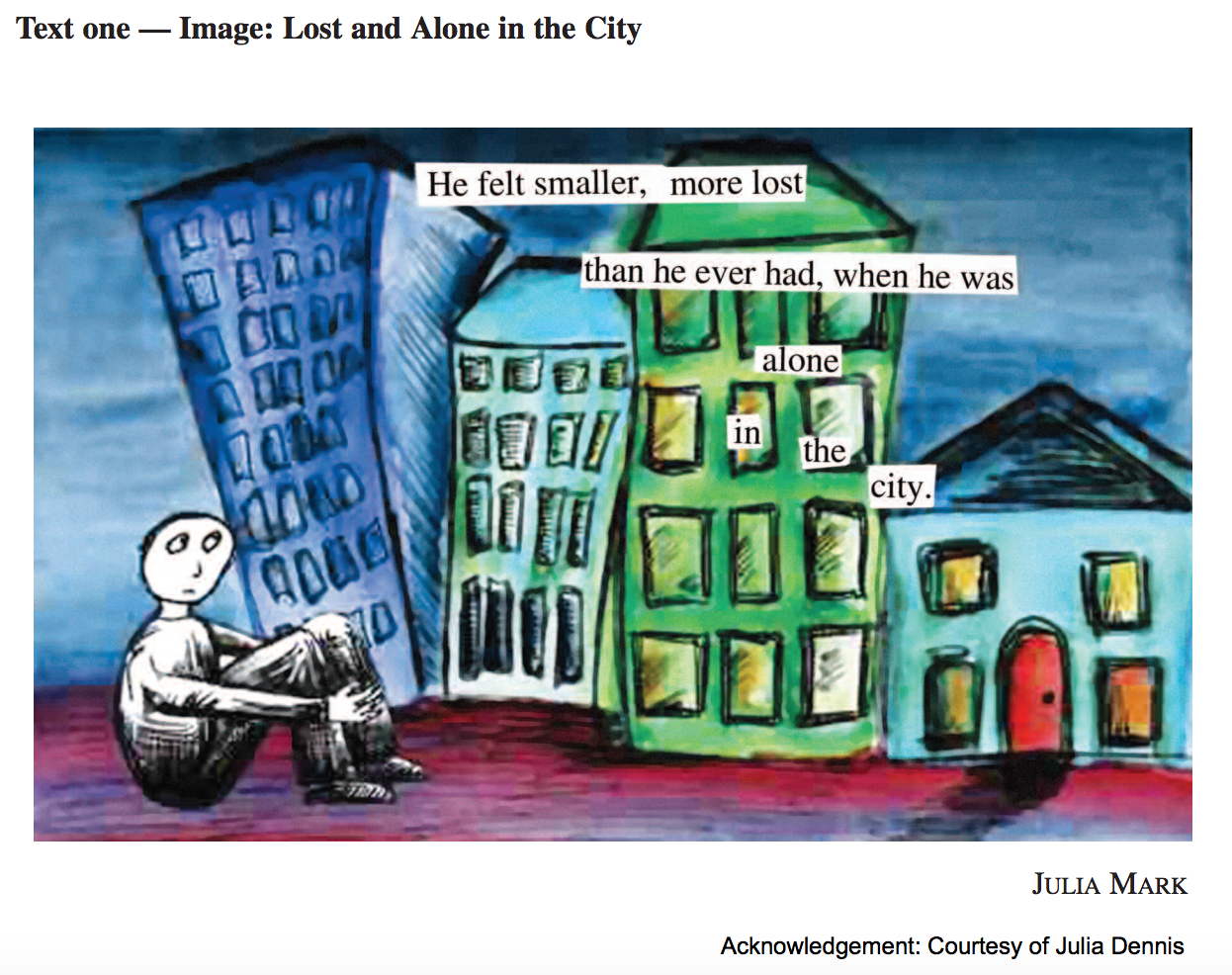
We’ll be focusing on the visual text above and the question below.

第1步:识别视觉技术
的first and most important step is to look at the visual text you’re going to be analysing – that’s pretty obvious. Because looking at images takes so much less time than reading a text however, this is also when you should identify your visual techniques.
You heard right – start looking for visual techniques right away!
的kind of techniques you’re looking for are things like;
颜色
Lighting
Vectors
服装
Gaze
Salience
的re’s a more comprehensive list of visual techniqueshereif you need to brush up on them!
的best way to pick these out in a visual text is tolook at what your eyes are immediately drawn toandfigure out why。是因为橙色图像中有一块蓝色吗?或者也许一个数字比另一个人更大?
Label each of these techniques and then annotate them with a few words about what effect the technique is having.
例如,如果图像主要是黄色,请写点“颜色 - 黄色有幸福的内涵,创造快乐的心情”。这很简单!
It seems a little odd to look for techniques before you’ve even looked closely at the question, but this actually helps you in the long run.
By finding a whole bunch of visual techniques right off the bat you’re able to go into your question feeling more prepared, and immediately pick out which techniques will suit the response you plan to write.
如果你首先阅读这个问题,你最终可能会尝试找到你想要谈论的特定技术,即使它不在那里。
For example, if the question asks about the mood of the image, you may immediately think to yourself “Oh, lighting helps create mood, I’ll talk about lighting!”.
的problem is that, even though it’s a good technique to use, the visual text you’re looking at may not actually have a good example of that technique!
的refore it’s better to find some strong techniques and fit them to the question, rather than trying to make the question fit to weaker techniques.
我们的示例具有一些非常明显的视觉技术以及我们可以挑选的一些子专题。
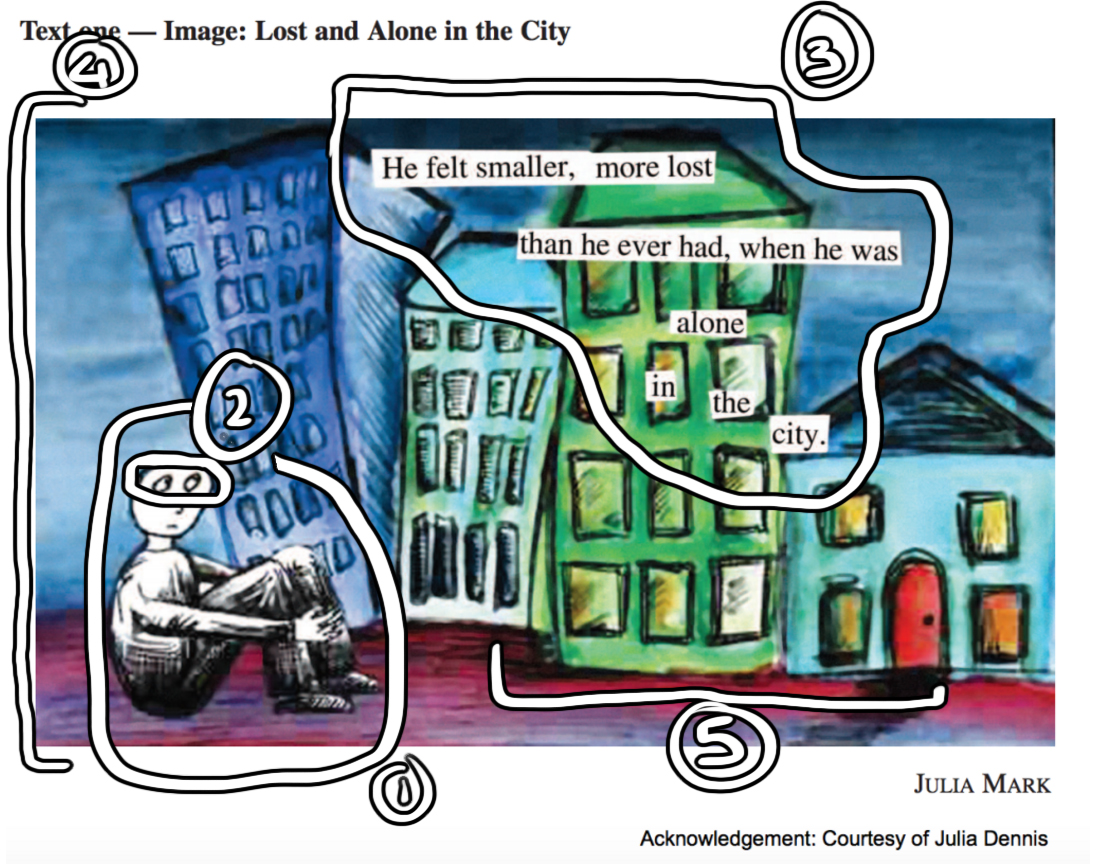
1. Colour contrast –black and white figure contrasts with colour background, symbolic of ‘grey’ mood and not fitting in
2. Gaze –offer gaze, creates a vector from the character’s eyes to the text, encourages audience to read the words
3. Text –symbolically appears ‘cut-out’ and disjointed, word connotations of “smaller”, “lost” and “alone”
4.颜色 -整个图像都是丰富的饱和颜色,以更好地对比黑白形象
5. Angles –the buildings/houses all appear at different angles, creating a sense of being off-kilter or unbalanced
While we can’t run straight into writing our response yet, this quick critical look at the text has already given us a whole bunch of techniques to analyse later – as well as marking exactly where they are in the image and what they’re doing!
Step 2: Read the Question and Break it Down
现在是弄清楚你被问到的视觉文字的时间!
因为你已经有了一大堆的视觉技巧,所以当你阅读问题时,很容易开始答案 - 或者至少选择你关注的技术!
It’s usually best to将问题分解为个人关键词和短语,以确切地弄清楚标记正在寻找的内容。
这与打破书面文本的英语问题相同,因为问题是在HSC纸的简短答案部分,他们通常会有更少的部分!
Once you’ve broken it down you’ll be able to figure out exactly which techniques from earlier best suit the question, so it’s a good idea to jot them down too.
Maybe even update your annotations to make it clear how you’re going to link the technique to the question being asked.
我们将在该示例中分解一个问题,但是对于更深入的指南来删除英语问题这文章!
经历问题并突出显示关键词使得它真的很容易挑选您在答案中对您的评论有关!
它还告诉您您想要分析的技术是什么样的技术,以便回答这个问题。

Having identified key points, let’s break down what each one means.
分析 -的markers are looking for you to use techniques from the text to break down what the text is actually saying. The best way to tackle the example is by using the ‘TEE’ method to show how the text represents an overall idea.
Portray –Portray is basically the fancy way of saying ‘show’! This means that we want to be looking at specific examples from the text – our techniques – and how they show something (the complex emotions/desire for connection).
Complex emotions –的markers want you to think of emotions in a more sophisticated way – instead of just saying “he’s sad” think about why he’s sad, how we know that he’s sad, etc. Also try to think of other emotions that a character may be feeling and how they conflict. Maybe a character is happy but also nervous, or sad but also relieved? These are things to consider when thinking about “complex” emotions.
Desire for connection –This is what our complex emotions should be about! Make sure that all the emotions you talk about link back to a character wanted to ‘connect’ or belong in some way, and talk about how the text shows that (visual techniques).
现在选择我们最好的3种技术,专注于我们的回复!
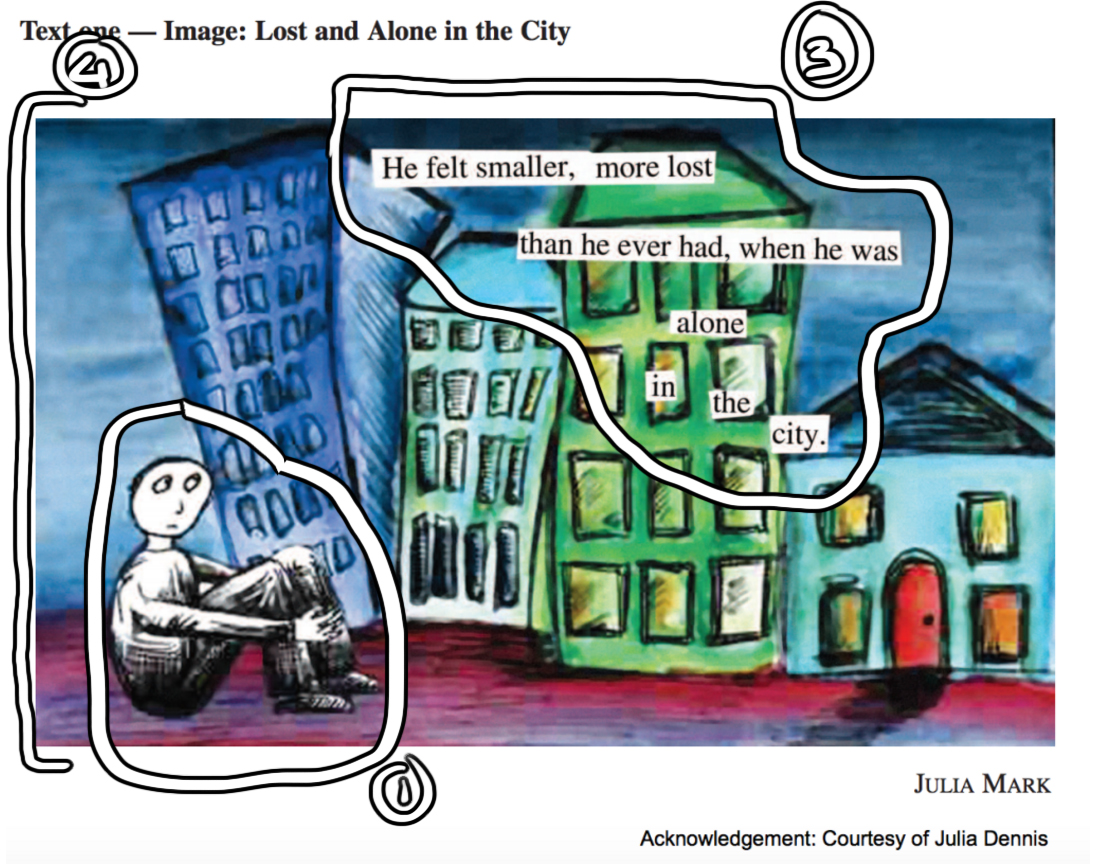
颜色contrast- 黑白形象与彩色背景,象征着“灰色”的情绪,不适合。表明角色意识到他们缺乏连接,并受到悲伤。
Text- 象征性地出现“切出”并脱节,“较小”,“丢失”和“单独”的词语内涵。强调性格的缺乏联系,负面影响他对联系的渴望具有他的情绪。
颜色- 整个图像丰富,饱和的颜色,以更好地对比黑白形象。展示“外面”明亮和快乐,明确表明角色将希望与它联系并享受更积极的情绪。
Step 3: Use the STEEL Structure
现在你的老师有可能钻钢format into your brain a thousand times over, but here’s a reminder of what the acronym means just in case.
S:Statement
T:技术
E:例子
E:Effect
L:Link
Short answer questions like the ones you’ll be getting on visual texts don’t need to follow the STEEL method as strictly, though it’s good to still try to keep it in mind. An edited ‘short-answer STEEL’ like the one below is a great way to keep your answer short but structured.
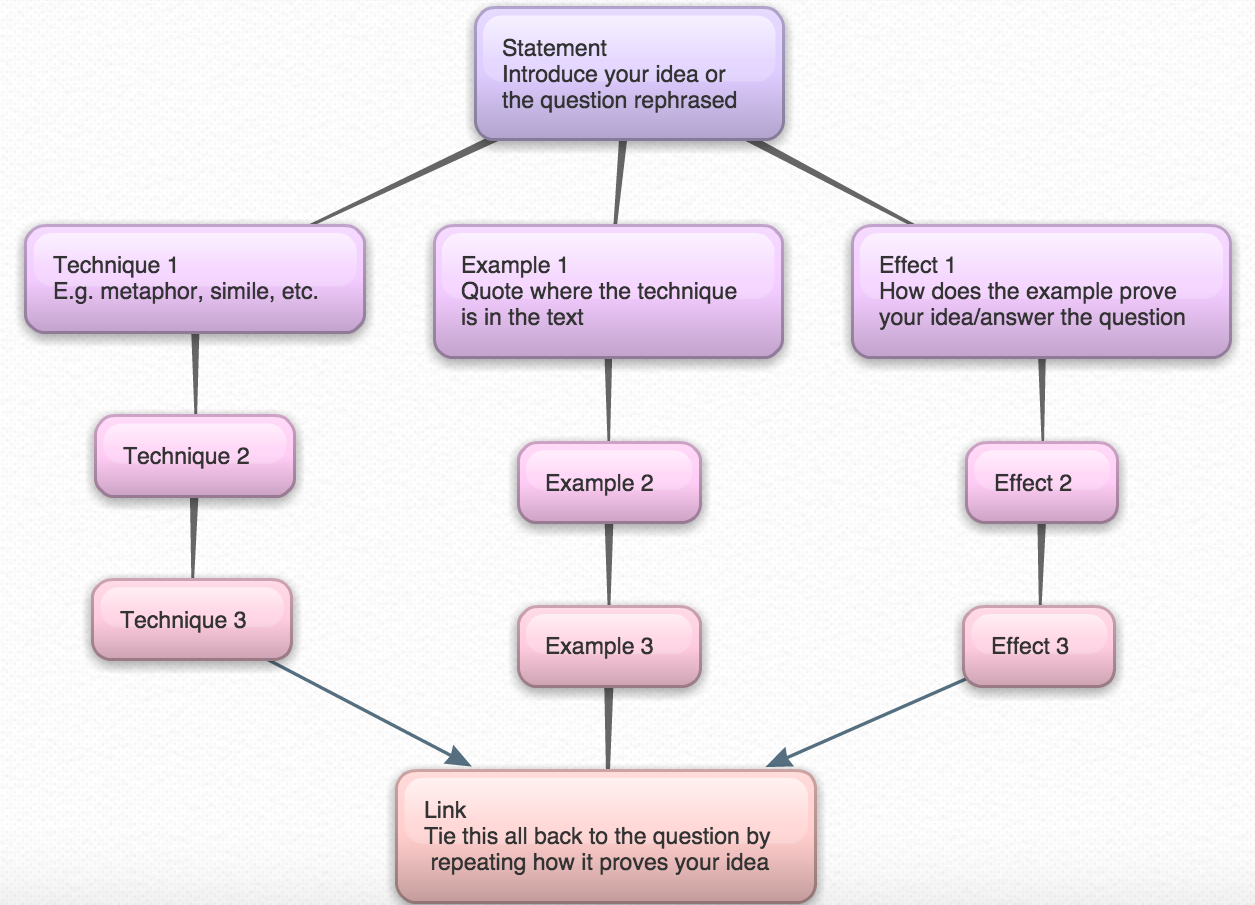
You’ll want to try to repeat the TEE section once for each technique, so three times all up, but only have one statement and link.
这样,您的响应将被结构化并包含您要在没有其需要20分钟的情况下进行的所有信息!请记住,这些是简短的回答问题,所以你不需要进入太多细节。
For example:
“通过使用对比度,文本和颜色,有效地描绘了由联系的欲望而导致的复杂情绪。
的figure in the lower left corner of the image is the most salient feature, his black and white colouring creating a high contrast with the otherwise colourful background. This choice of colour to greyscale contrast creates an immediate sense that the character lacks a connection to the world around him, which results in his own sadness or ‘grey’ mood. The text in the upper right confirms this, not only through the negative connotations of words such as “smaller”, “lost” and “alone”, but also through its stylisation as ‘cut out’ fragments. This emphasises the sense of disjointedness and disconnection borne of lacking connection and reinforces the character’s emotions of isolation and melancholy. Finally, the colour used in the rest of the image is rich and vibrant, a clear choice made to present the ‘outside world’ as desirable and full of colour. This prompts the audience to consider that the character clearly desires connections with this world, but seems reluctant to make them. This reveals a more complex emotional situation as he seems to actively choose to remain isolated, perhaps out of fear of rejection.
总的来说,图像对如何对连接的欲望产生复杂的洞察力会导致复杂的情绪,因为角色似乎既愿望联系并积极避开它们。因此,它是通过对比的,文本和颜色,文字是有效地描绘了如何复杂的情绪是如何因连接而导致的复杂情绪。“
完成了——一个神奇的视觉反应text question!
现在是时候让你尝试一下!
现在是时候送去了!本文已始终显示如何粉碎令人敬畏的回复,所以写作。
最终目标是能够在头脑中执行这些步骤,但只有练习并实际上正在纸上的所有步骤 - 它会使在测试条件下重复一切!
寻找额外的帮助,分析HSC英语的视觉文本?
We pride ourselves on our inspirational HSC English coaches and mentors!
我们在各种科目中提供辅导和指导课程K-12,beplay安卓西西软件在您的家中或我们在Hornsby的艺术校园内进行了个性化的课程!
To find out more and get started with an inspirational tutor and mentor61beplay体育
Give us a ring on 1300 267 888, email us at[电子邮件受保护]or check us out onFacebook!
Maddison Leachcompleted her HSC in 2014, achieving an ATAR of 98.00 and Band 6 in all her subjects. She enjoys helping students through the academic and other aspects of school life, even though it sometimes makes her feel old. Maddison has had a passion for writing since her early teens, having had several short stories published before joining the world of blogging. She’s currently studying a Bachelor of Design at the University of Technology Sydney and spends most of her time trying not to get caught sketching people on trains.